
Not Waste Until We Waste It. Thoughts About Textile Waste in Aotearoa
Clothing is everywhere. It fills our wardrobes, overflows from donation bins, and increasingly is ending up in landfill. But the problem with fabric and textile waste isn’t just what we throw away, it’s the speed and volume with which we buy.
As one sustainability advocate puts it: “It’s not waste until we waste it.”
And when it comes to textiles, we’re wasting a lot. And I mean a lot.
A Growing Waste Stream
Textiles are now one of the fastest-growing waste streams in the world, and Aotearoa New Zealand is no exception. In fact, textiles sit within New Zealand’s top waste streams heading to landfill, alongside building and construction, organics, and plastics. Estimates suggest around 180,000 tonnes of textiles are sent to landfill each year – that’s about 34kg per person, every year.
Here in Mercury Bay, we’re making good progress in some areas. At Wāhi Tukurua, we’re helping divert building and construction materials. The Thames-Coromandel District Council has rolled out roadside food waste collections, and soft plastics can now be recycled locally.
But textiles? That’s where things get tricky.
At a recent hui with local reuse and resale groups (our op-shops and community stores), it was clear that clothing and textiles are becoming a major issue. The volume coming through is huge, and much of it simply isn’t suitable for resale.
And this isn’t just a waste problem – it’s a resource problem too.
Clothing carries a significant environmental footprint long before it reaches our wardrobes. There are the emissions from manufacturing, the energy and water used in production, and the transport involved in global supply chains. Synthetic fabrics shed microplastics, which end up in our waterways and oceans.
Then there’s the human side. Many garments are produced in countries where working conditions and wages remain deeply concerning.
Despite all of this, the rise of fast fashion has changed how we treat clothing. We’re buying more, wearing it less, and moving it on faster than ever. Globally, clothing production has surged, while garments are now kept for half as long as they were just twenty years ago.
The Donation Myth
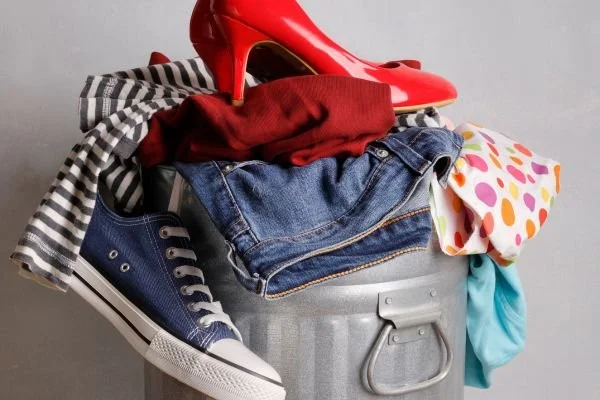
Many people assume that donating clothes to charity shops guarantees they will be reused. It’s a well-intentioned act, but the reality is more complicated.
A recent Zero Waste Network newsletter highlighted that an estimated 80% of clothing acquired each year by reuse shops in Tāmaki Makaurau Auckland ultimately ends up in landfill.
That’s not because they want to throw clothing away, far from it. It’s because they simply receive far more clothing than they can realistically sell, and much of what arrives is damaged, stained, or unsuitable for resale.
Reuse shops across the country increasingly report becoming unofficial dumping grounds for clothing that people don’t want to deal with themselves.
A recent Northland trial, reported by the Northern Advocate, highlights the scale of the problem. Hospice and charity shops in the region are receiving such large volumes of unsellable clothing that they are working with recycling organisations to turn the textiles into mattresses, insulation, and erosion matting.
It’s an innovative solution, and it’s helping divert waste from landfill. But the project also highlights a deeper issue: the volume of clothing being discarded is enormous.
One charity involved in the trial reported filling three large wool sacks of unusable clothing every week, while others said they sometimes had to stop accepting donations altogether because they were overwhelmed.
As one project organiser put it, “Excess clothing is a massive consumer problem.”
Can Textiles Be Recycled?
In recent years, textile recycling initiatives have begun appearing around New Zealand.
Companies are experimenting with technologies that shred textiles into insulation, mattress filling, or industrial materials. Some organisations are also exploring fibre-to-fibre recycling, where old clothing is broken down and turned into new yarn.
These efforts are positive steps, and organisations and industry groups across the country are working hard to develop solutions.
But recycling alone will not solve the problem.
Unlike aluminium or glass, textiles are complex materials. Many garments are made from blends of fibres, plastics, dyes, and trims that are difficult to separate and process. Recycling them can be technically challenging and expensive. Globally it is estimated that 1% of clothing is recycled into new garments.
And even when recycling options exist, the scale of the waste often far exceeds the available capacity.
Recycling can be part of the solution, but it should never become a feel-good excuse to keep consuming at the same pace.
The Real Issue: Consumption
At its heart, the textile waste problem is not about disposal, it’s about consumption.
When clothing becomes cheap enough to treat as disposable, it changes how we value it. Instead of repairing or reusing garments, it’s often easier to simply replace them.
But every garment has already used resources, energy, labour, and transport long before it reaches a shop.
When we throw clothing away after a few wears, those resources are wasted too.
Slowing Down Fashion
The alternative to fast fashion is often described as slow fashion. A mindset that values quality, longevity, and thoughtful purchasing.
That doesn’t mean never buying new clothes. It simply means asking a few questions before we do.
For example:
Do I really need this item?
Will I still want to wear it in a year?
Is it made well enough to last?
Can I repair it if it breaks?
Could I find something second-hand instead?
These small pauses can make a big difference.
Thinking Beyond the Purchase
And once we do buy something, it’s worth thinking about its whole life cycle.
Could it eventually be:
repaired
altered
passed on
donated
repurposed into something else
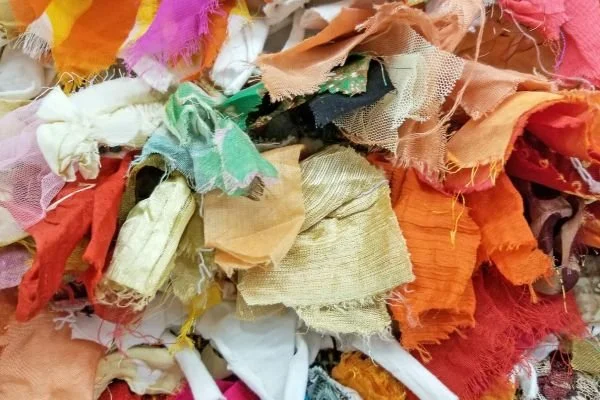
Even worn-out textiles can sometimes be reused as cleaning rags, quilting material, insulation, or craft fabric.
The goal is simple: keep materials in use for as long as possible.
A Collective Responsibility
The textile waste challenge won’t be solved by individuals alone. It will require action from manufacturers, retailers, policymakers, and waste systems as well.
Encouragingly, initiatives such as sustainable design programmes, circular fashion awards, and textile recycling trials are beginning to appear across Aotearoa.
But meaningful change will also depend on something much simpler: how we choose to buy.
Stop and Think
So, the next time something pops up online with a tempting price tag and a “buy now” button, it’s worth pausing for a moment.
Not because buying clothes is wrong, but because every purchase carries consequences.
If we slow down, buy thoughtfully, and take care of the things we already own, we reduce waste before it even begins.
Because ultimately, textiles only become waste when we treat them that way.
And as the saying goes:
It’s not waste – until we waste it.
-Kat Neilson-Jones
